
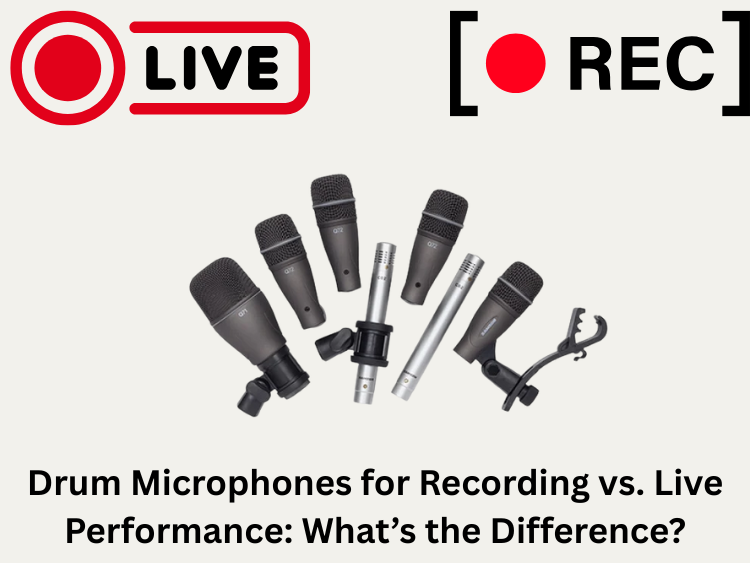
When recorded live or in the studio, drums are one of the most complicated and dynamic instruments to capture. Drums are the heart of any rhythm section and give music energy, emotion, and punch. However, to mic them correctly, you need to pay attention to detail and have a plan. A question that artists, engineers, and producers often ask is:
Are there changes between drum mics used for live performance and those used for recording?
The short answer is yes. The mics used are very different between studio and live because of the different goals, settings, and equipment sets. Let’s talk about these differences and what they mean for both audio engineers and musicians.

Different Environments, Different Priorities
Studio Taking Notes
Recording studios are controlled places where accuracy is important. Acoustic treatment, isolated booths, and room mics are some of the tools used to shape the sound of the drums. Engineers can experiment with mic placement, record multiple takes, and fine-tune everything during post-processing. In these settings, recording drum mics are carefully selected for their sensitivity and tonal accuracy to capture the full depth and detail of the performance.
Show in Real Life
No one is in charge of live shows. The sound in each place is different. Part of the problem is that stage monitors, crowd noise, and other instruments can get into mics. That’s why live performance drum mics need to prioritize durability, input rejection, and ease of setup to handle unpredictable environments and deliver consistent sound.
Types of Microphones: Condensers vs. Dynamics
Microphones for Recording
This type of mic is sensitive and can pick up a lot of different frequencies. It is often used in the studio for overheads, room sounds, and even snares and toms. These mics pick up every detail and subtlety, so they’re great for recording a drum kit’s whole sound. When exploring the best drum mic setups, especially in the context of studio vs live drum sound, these condenser mics are preferred for their precision and range in controlled environments.
For example:
- AKG C414, Neumann KM184, and Rode NT5 are the overheads.
- AKG D112 and Shure Beta 91A for kicks.
- 5Core Drum Microphone.
Live Sound Systems
Dynamic mics are most common on stage. They are more durable, don’t react as badly to input, and can handle loud sounds. They might not be as sensitive as studio condensers, but they are reliable and give a lot of power in noisy, random places. While typically used in live setups, certain dynamic models also hold their own as recording drum mics, especially when a punchy, focused sound is desired.
For example:
- Shure Beta 52A and Audix D6 for kicks.
- 5Core Drum Mic Kit
- Audix D2/D4 and Sennheiser e604 for Toms
- Shure SM81 and Audio-Technica PRO 37 are the overheads.
Where and How Many Microphones to Use
In the Studio
To get a full picture of a kit, studio techs often use more than one microphone. Quite often, people see:
- Each drum has a closed mic.
- Two overheads
- Mics in the room
- Hi-hat mic
- Snare mic at the bottom
- Low-end sub-kick mic
This method gives you the most power over the mixing. To make a perfect drum sound, you can separate, EQ, and compress each part separately.
Set Up Live
When you’re live, speed and simplicity are important. There won’t be as many mics:
- Kick
- Snare
- Toms (who often use clip-on mics)
- Headaches or cymbal spots
It’s not always about technique; the goal is clarity and separation. Fewer mics mean less stage noise and echo, and it’s easier to fix problems during the show.
Being Durable and Dependable
Live mics have to be able to handle being set up and taken down a lot, being handled roughly, and the fact that live shows are hard to plan for. Live performance drum mics, in particular, are built for durability and reliability under unpredictable conditions. Mics used for recording, on the other hand, don’t move around much. Most of the time, they are treated carefully in a safe place. This means that studio mics may be more fragile and need to be fine-tuned. In general, you shouldn’t bring your old ribbon mic with you on tour.
Rejection of Feedback and Noise
When you record, feedback doesn’t bother you, but when you’re on stage, it always does. Mics used to record live drums must:
- Turn away bleed from other instruments
- Lessen background noise
- Do not listen to monitors or PA.
Live, cardioid, or hyper cardioid dynamic mics are best because they pick up sound tightly and keep the source separate. Omnidirectional or figure-8 patterns can be used in creative ways in the studio to record room sounds or stereo images.

Portable and Easy to Set Up Time
On tour, every minute counts. Mic setups need to be fast, efficient, and hassle-free. It’s easy to set up and doesn’t require any extra stands for clip-on mics like the Sennheiser e604 or 5Core Drum Mic works well with toms and snares. While they’re in the studio, the techs can try out different mics, angles, and distances. Don’t rush; the only thing that matters is that the sound is perfect.
How Important Is Sound: Punch vs. Detail
When mixing live sounds, punch and clarity are most important. There are often guitars, bass, and singing in the mix, and the drum kit has to stand out. Engineers pay attention to transients, middle strikes, and reducing boominess. When you record something, depth, room, and detail are more important. Toms should have a full sound, cymbals should shimmer, and the snare should play soft ghost notes. For this, you need better mics, preamps, and EQing with more detail.
Thoughts on the Budget
Buying a studio microphone can cost a lot of money. Each of these high-end condensers and ribbons can cost thousands of dollars, but they are made to be very precise with sound. Live mics still have a range of prices, but they are usually cheaper and easier to repair. It doesn’t cost as much if one gets lost or broken during a job. That being said, a lot of engineers choose dual-purpose mics, like the Shure SM57 or the Sennheiser MD421, because they work well in both situations. Brands like 5 Core also offer a wide selection of drum microphones and accessories that cater to both live and studio needs, giving professionals more flexibility within a reasonable budget.
If you’re in the audio business—whether you run a studio, manage a live venue, or sell gear—partnering with 5 Core can help you access high-quality microphones, drum kits, and audio accessories at competitive prices. Their Business Partnership Program offers exclusive benefits like same-day shipping, no minimum order quantity, and up to 45% discounts for partners looking to expand their inventory and increase ROI.
Conclusion
Recording in a studio and performing live both need to mic the drums, but the goals and settings are very different. Using high-quality condenser mics in a controlled area, studio settings try to pick up on detail, depth, and subtlety. Live setups generally use tough dynamic mics because they are durable, easy to set up, and good at blocking feedback. When you know these differences, you can pick the right gear for any situation. When you play on stage or record in a studio, the mics you use make a big difference in how your drums sound.