
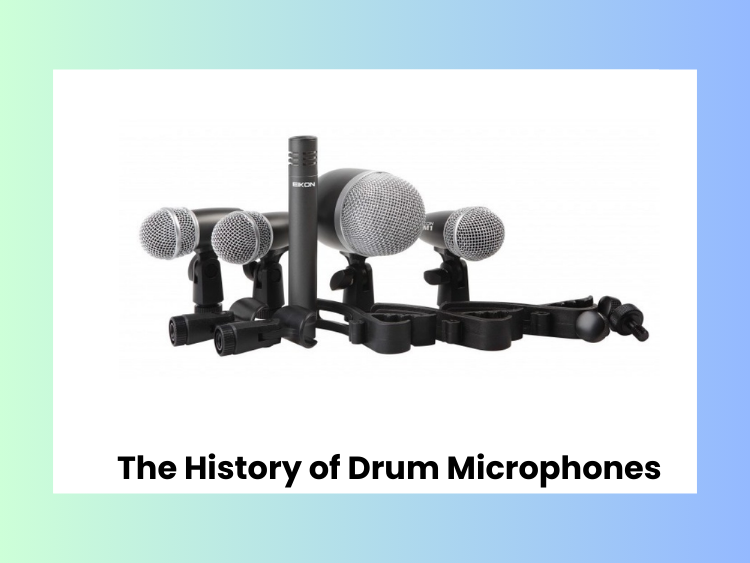
Are you interested in hearing a drum recording from the 1960s and comparing it to something from now? There is a big change! A big part of that change is how we record drums. Mics for drums have also come a long way. Gone are the days when the drums sounded like they were far away and echoed. Now you can hear clear, strong drums.
In the past of music technology, drum mics have a very interesting story. In the beginning, drums were not even miked very often. As recording methods improved, engineers started to try out different places for microphones. This led to the multi-mic setups we use today, which produce such deep kicks, sharp snares, and sparkling cymbals. But first, let’s go back in time and see how drum miking has changed over the years.
The Early Days: One Mic to Capture It All (1920s–1940s)
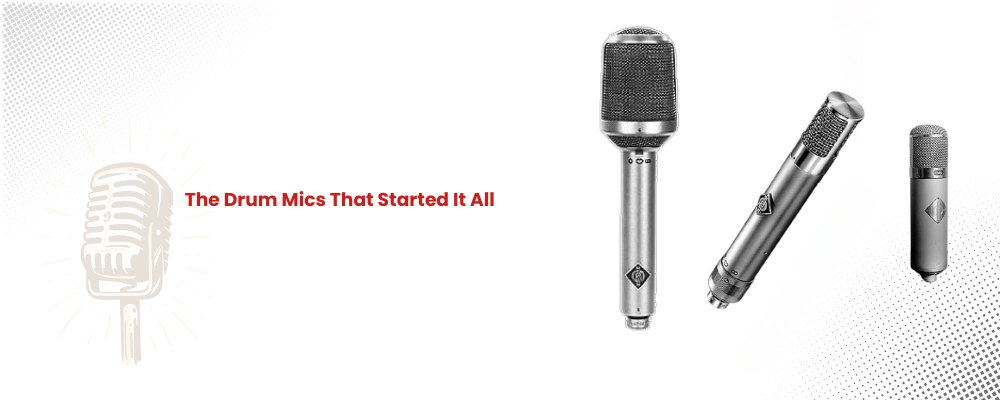
In the past, recording engineers would use one or two microphones to pick up a whole band long before there was a microphone just for the drums. To record the room sound at this point, big condensers or ribbon mics like the RCA 44 or Western Electric 618A were set up to pick up everything, even the drums.
Early records of jazz and swing didn’t focus on the drums. At that time, monitors didn’t have a lot of sensitivity or frequency response, so bass drums often sounded weak, and cymbals got lost in the noise. Without separate mics, it wasn’t possible to change how the drummer was set up for the rest of the band. Instead, the players had to be matched in a way that didn’t need any changes.
The Birth of Close Miking (1950s–1960s)
As recording equipment got better, engineers began to use more than one microphone in studios. The 1950s and ’60s ushered in ribbon and dynamic microphones closer to the individual drum elements. Iconic studios, from Abbey Road to Capitol Records, were experimenting with miking techniques that would allow for a more controlled-sounding drum.
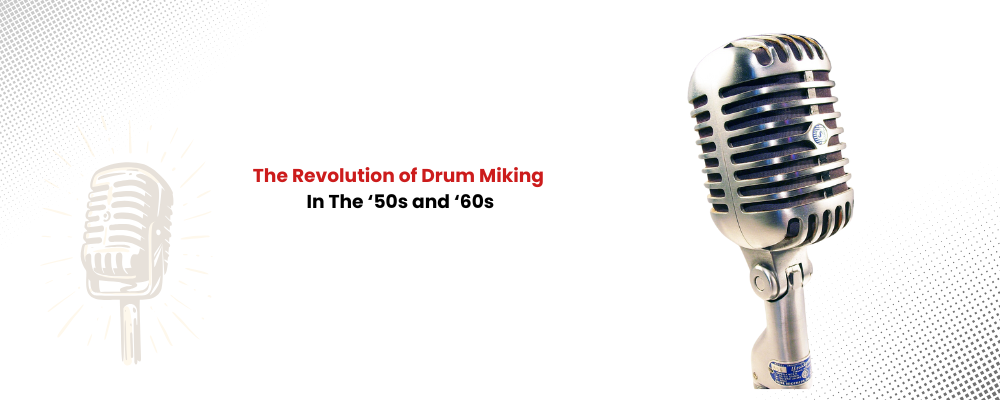
The Shure 55 — often referred to as the Elvis mic — was one of the first dynamic microphones used to record a drum kit. Also, at this time, engineers began using the Neumann U47 and AKG D12 to achieve fuller sounds on the drums.
The “Glyn Johns Method,” one of the most celebrated drum miking techniques from the 1960s, was devised by the engineer Glyn Johns while recording groups like Led Zeppelin. This technique employed just a couple of strategically placed microphones to generate a large, open drum sound.
The Explosion of Multi-Mic Setups (1970s–1980s)
By the 1970s, multi-mic setups had become standard in studios. Engineers began utilizing dedicated microphones for every single drum for a more defined and punchy sound.
The most popular choices during this period were the Shure SM57 for snare drums, AKG D112 for kick drums adding to the older AKG D12, Sennheiser MD421 for toms, and Neumann U87 in the studio for overhead and room mics.
Producers also began to play around with gated reverb, a technique that would become famous in 1980s drum recordings. This effect, used in conjunction with close miking, produced drums so huge and thunderous it had never been heard before. Phil Collins’ “In the Air Tonight” is a good example of this style.
The Rise of Live Drum Miking (1990s–2000s)
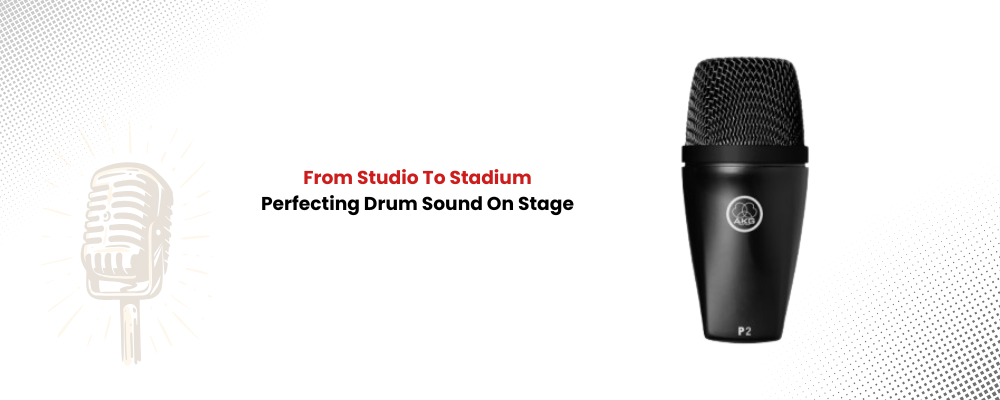
As live sound systems progressed, the drum mics at concerts grew much more sophisticated. From that point onwards, dedicated drum mics specifically designed to deal with high SPL were readily available.
Shure, Audix, and Sennheiser, among others, created mic packs literally designed for drum kits, providing the live engineer with a ready-made solution for the stage to capture a great drum sound.
The technology of wireless microphones also improved, which allowed greater flexibility for large-scale concerts. Meanwhile, engineers were dialing in their drum recording techniques in studios, using a combination of vintage and modern microphones to get the best of both worlds.
The Digital Era and Modern Innovations (2010s–Present)
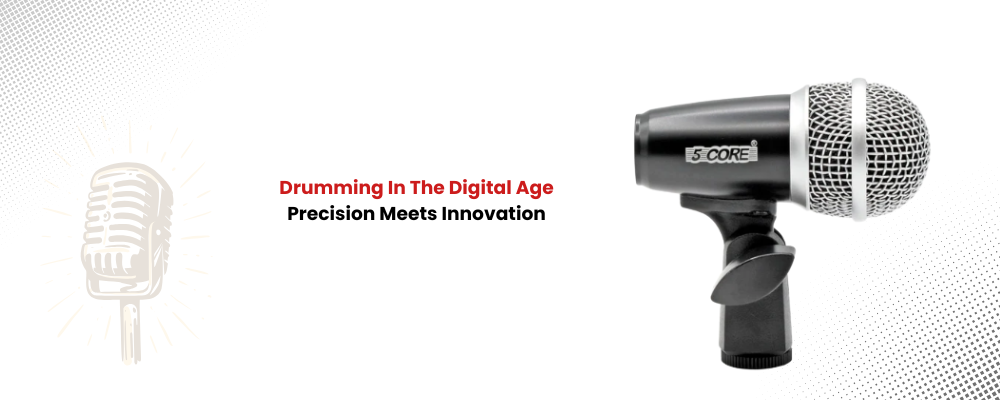
Drum recording has come a long way since then. Drum sounds are being shaped by engineers with a mix of analog and digital tech. This brought forth things like small clip-on mics for toms and snare, boundary microphones for bass drums, and even digital modeling mics that can recreate the sound of classic vintage microphones.
Key developments in this area encompass everything from contact microphones that directly mount to the drum shell, resulting in a ‘raw’ isolated drum sound, to overhead array techniques that use stereo and even 3D audio to record a broader and more immersive drum sound, to trigger microphones commonly used live and in the studio to blend the natural sound of the drum and electronic drum samples.
Conclusion
Drum microphones have come a long way and have certainly influenced the way music sounds. From the single-mic recordings of yore to multi-mic and digital hybrid setups of today, drum miking has always found a way to accommodate the needs of musicians and producers alike. You either love the raw, natural sound of vintage recordings or the tight, polished drums of modern music, and it all comes down to how you mic the drums. And who knows how the sound of drum recording will change as technology advances? One thing’s for certain—the beat must roll on!