
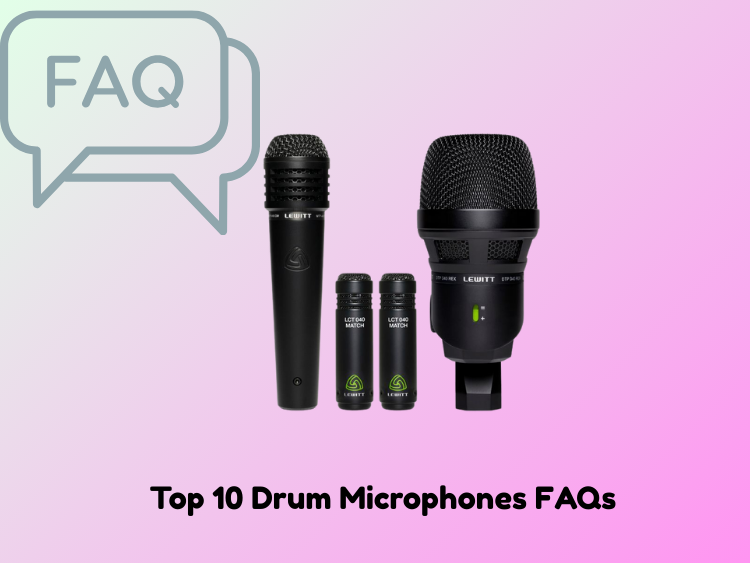
The best drum mics are necessary to capture the full range of tones, sharpness, and dynamic range of the drums, whether they are being played live or in the studio. Different types of microphones are used for each part of the drum kit. Knowing which type to use, how to use it, and how it affects the sound will definitely make a difference in how the recording or live mix sounds in the end. Let’s talk about the most common questions people have about drum mics and help you feel confident setting up your kit.
1. Why do drums need specific microphones?
Drums are arguably one of the hardest instruments to mic up well since they cover such a broad frequency spectrum and have a wide dynamic range. Drums are also high SPL instruments, so microphones need to be able to manage the volume and those transient waves hitting your microphone without distortion. With specialized microphones for drums that are designed to extract the specific frequencies associated with the different parts of the kit, you can listen out for clarity and punch that standard microphones often do not possess.
2. What are the best types of microphones for miking drums?
Dynamic microphones, condenser microphones, and ribbon microphones are the most common types of microphones used for drums. While most genres sound great on many different types of microphones, some are more desirable for certain purposes — for example, dynamic mics are a popular choice for snare drums, toms, and kick drums, as they tend to be more durable and can handle high SPLs. Dynamic mics are great for the snare but condenser microphones are preferred for overhead mics and even cymbals to take advantage of the broader frequency response and sensitivity to capture more detail. Ribbon microphones, however, are more fragile and offer a smoother, vintage tone and are used for overheads or room mics in certain styles of recording.
3. What is the difference between a snare drum microphone and a tom microphone?
Even if tom and snare drums microphones are both dynamic microphones, the main difference between them is their design and frequency response. Snare drum microphones are specifically designed to manage the bright and snappy sound when the snare wire gets hit, featuring a tighter frequency response that boosts mid frequencies to pick up that snare attack. Tom microphones, on the other hand, have a much wider frequency response that allows them to capture the low-end thump of the toms while still picking up the attack and decay of the drumhead. They are commonly used with a little broader polar pattern to make sure the tom’s full range is captured.
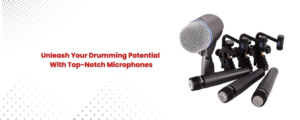
4. How do I position drum microphones for optimal sound?
To get good drum sounds, however, placing the microphone is one of the most important things. To get rid of as much background noise as possible, they need to put the mic inside the bass drum, next to the beater head, or just outside the drum. You should put the mic a few inches above the edge of the snare drum and point it straight at the middle of the head. Mic toms are placed just above the edge of the drum and angled toward the middle to pick up the hit and tone. Omni-Directional Overhead: Place the mic a few feet above the drums and cymbals to get a balanced stereo picture. Room mics can be used with background noise to give the impression of space.
5. What is a good microphone for miking a kick drum?
A mic with high SPL handling and a forward, low-end response is what you want for kick drums. Popular choices are the Shure Beta 52A, 5Core Drum Mic, AKG D112, and the Audix D6. These mics can handle the loud, low-frequency sound of the kick drum without distortion. They usually have a custom frequency response that emphasizes the punchy, low-end thump and minimizes upper midrange or high-frequency build-up that could cloud the mix.
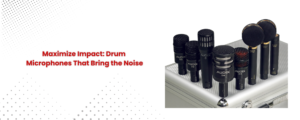
6. Are condenser microphones suitable for drums?
Drums are pretty good with condenser microphones, especially for recording overheads, post “cymbals”, and room sound. These designs yield better frequency response and sensitivity than dynamic microphones, which allows condensers to effectively capture the high frequencies and subtleties inherent to cymbals or other percussive elements. Condenser mics are equally appropriate when an SPL is not demanding, as they tend to distort at high SPL. Widely used overhead mics on the more affordable side include the Audio-Technica AT2020 or Neumann KM184, all-made-up mics regarded for their clarity and wide response; in this instance, trying to match a FET with Equity two-channel (microphones) for stereo up front surrounded by paralleled direct signals from the MacBook.
7. What microphone should I use for miking cymbals?
Cymbals are typically used in conjunction with condenser mics, as their enhanced range in high-frequency acoustics and sensitivity are an asset to any recording. Many engineers use small-diaphragm condenser microphones for overheads, e.g., Shure SM81 or Neumann KM184, as they record the shimmer and articulation of the cymbals without excessive top-end response. They also offer high SPL handling, which is crucial for anyone playing in front of cymbals.
8. How many microphones do I need for a drum kit?
The number of microphones you need depends on the type of sound you’re going for and whether you’re recording or performing live. A basic drum kit setup requires at least four microphones: one for the kick drum, one for the snare drum, one for the overheads (usually two microphones placed above the kit), and one for the hi-hat. For a more detailed recording, additional mics can be used for each tom, additional overheads for a wider stereo image, and room microphones for ambiance. Some professional drum kits may use as many as 8-10 microphones for optimal isolation and sound quality.
9. What are the advantages of using a drum mic kit?
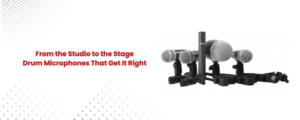
A good drum mic kit usually includes all the mics you need for the whole kit, and often match each other in terms of sound and performance. Drum sound kits provide a common tone across the drum kit, which is the biggest advantage of using a drum mic kit. These kits are typically much cheaper than purchasing single mics, plus they’re engineered to complement each other for bringing the live sound in or recording it in the studio. Some popular drum mic kits include Shure, 5Core, AKG, and Audix.
10. Can I use regular microphones for drums?
Regular speakers can be used, but they’re not the best way to get a full picture of the range and volume of drum sounds. In general, regular mics aren’t made to handle the high SPLs or unique tones of drums. Like, a voice microphone might not pick up all the punch of a kick drum or all the brightness of a snare. On the other hand, specialized drum mics are made to handle the power, detail, and nuances of drums, making sure the sound is clear and accurate.
Conclusion
Different types of mics for drums are available depending on the sound you want, the room where you’re recording, and the drums themselves. If you know about the different kinds of mics, where to put them, and what they do in the drum kit, you can set up your kit so that your playing sound is at its best, whether you’re in the studio or on stage.