

The snare drum is like the heartbeat of any groove. Its sharp crack or solid thump stands out and brings your rhythm section to life. But to get that tight, punchy snare sound in your recordings, choosing the right mic and placing it properly is super important. This article all comes down to picking a good mic and using a few smart techniques to nail that satisfying snare tone.

Know What It Means to Be “Tight and Punchy”
Allow us to explain what we mean by “tight and punchy” before we talk about mic models and methods. There aren’t many notes in a tight snare, and the attack is quick. The fade is short and controlled. It doesn’t ring over and over or get lost in the echoes. When a powerful drum hits you in the chest, it has weight, depth, and force. These qualities make a snare stand out without being sharp or too soft.
Pick The Correct Microphone
Choosing the right microphone for your snare—or any part of your drum kit—comes down to your playing style, sonic goals, and the space you’re working in.
If you’re aiming for a tight, focused snare tone with strong midrange and minimal bleed, a dynamic mic like the Shure SM57 or Audix i5 delivers reliable results. They’re especially effective in live settings and smaller studios thanks to their durability and directional pickup patterns.
Need something a bit more refined or with greater detail capture? The Beyerdynamic M201TG or Sennheiser MD421 offer enhanced clarity and richer low-end response, ideal for those who want a fuller snare tone with studio-grade presence.
On the more experimental or nuanced side, small diaphragm condensers like the AKG C451 or Neumann KM184 work well for top mic stacking or rimshot-heavy styles—but be aware of potential bleed and clipping in loud environments.
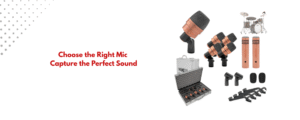
If you’re looking for a versatile, budget-friendly solution that works well across snares, toms, and hand percussion, the 5 Core Conga, Snare, Tom Microphone Kit is worth checking out. With a condenser capsule design and XLR connectivity, it’s built for clarity, making it a great fit for both practice and semi-professional studio use.

The Impact of Mic Placement
If the mic is in the wrong place, it can only do so much. Here are some important tips:
- Aim for the Middle: Place the mic in the middle of the drum, about 1 to 2 inches above the head and 1 to 2 inches from the edge. This gives you the snare’s attack and body.
- Angle the Mic: If you tilt the mic toward the shell, you can get more body and less hi-hat bleed. Moving it a little away from the hi-hat helps separate the sound of the snare.
- Try Different Heights: Slightly raising the mic can cut down on low-end boom and bring out more snap. Bringing it down brings you closer to that dry, front-end bite.
- Bottom Mic for Snap: Putting a second mic under the snare to record snare wire sizzle is called “bottom mic for snap.” Don’t forget to change the phase on this mic so that it doesn’t cancel out the top mic.
Make the Space Small or Use a Tight Room
If the room isn’t clean, not even the best mic can save a sound. To change how reflections look around the drum kit, use gobos or absorption screens. Tighter rooms naturally make snare sounds that are tighter. If your room is big, you might want to gate or edit the echo tails by hand later.
Tips for Better Tone and Punch
A mic can only pick up what it is given. Make sure:
- You can use moon gels, O-rings, or tape to make the snare sound better if you need to. The top head is tight.
- The drummer hits all the time, which is important if you want the punch to come from natural rhythms.
- Do not play on a cheap snare drum. A square or dead snare in the mix can’t be fixed.
Last Thoughts
Before opening a program, you need to work on your snare. It’s so much easier to mix when you have the right mic, place it correctly, and tune the drums. To get a dry funk snap, a rock crack, or a big pop punch, you need to know what tools you have and use them purposefully. It’s best to trust your ears and try out a few different mics and settings. It takes more than just gear to make a snare sound tight and sharp. Every link in the chain has to work together. Hit hard, use your mic smartly, and let your snare shine.